
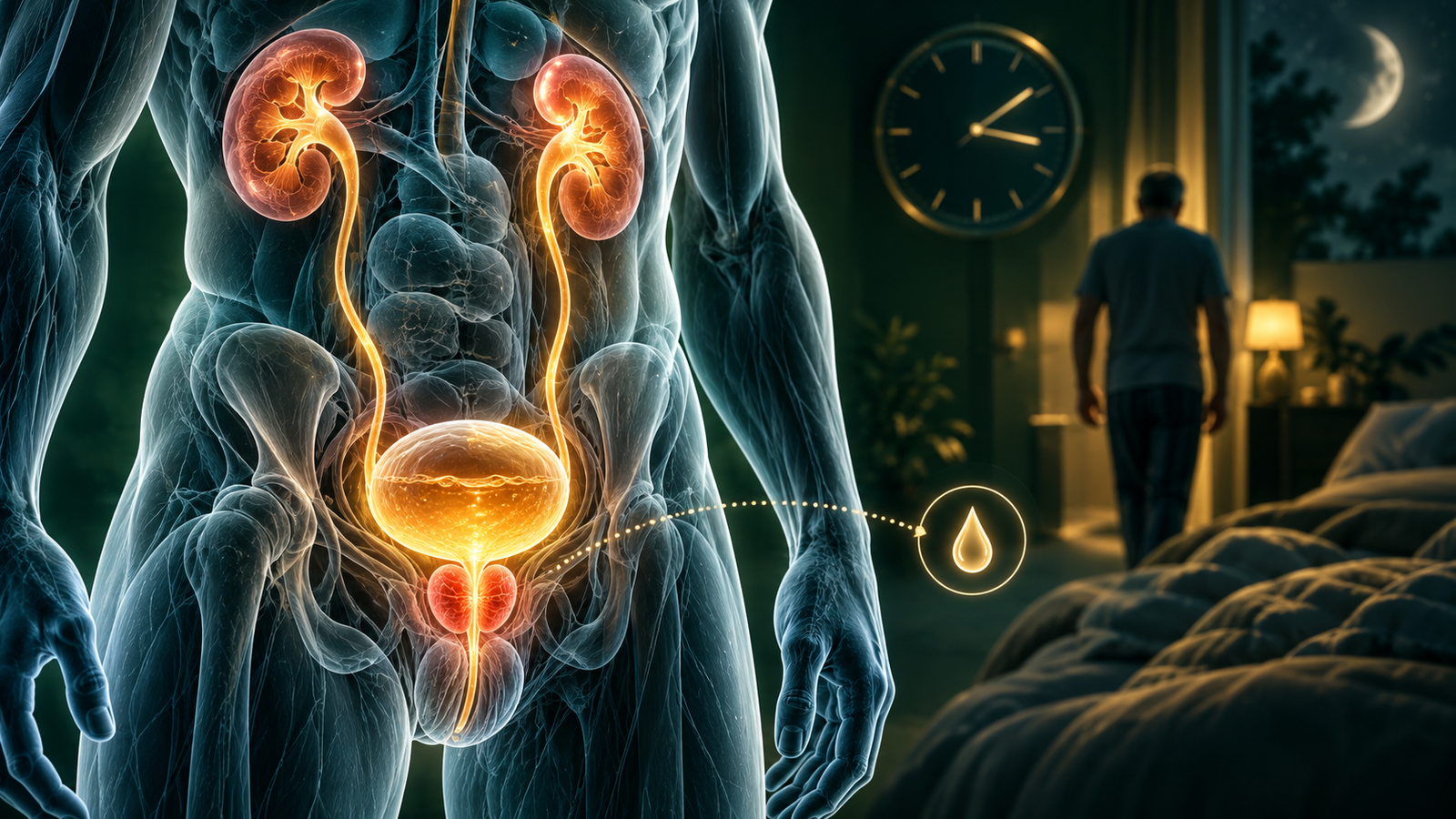
MEN’S PROSTATE & PREVENTIVE HEALTH
You go to bed hoping for a good night’s sleep. Then, a few hours later, you’re awake again, walking to the bathroom. Sound familiar?
Waking up to urinate at night can feel like a small inconvenience. But when it happens repeatedly, it can disturb sleep, affect energy, and leave you wondering whether something has changed in your health.
The medical term is nocturia. It becomes more common with age, but it is not always caused by an enlarged prostate.
In this guide, we’ll explore nine possible causes of frequent nighttime urination in men over 40, what your symptoms may reveal, and when medical evaluation is important.
What Is Nocturia?
Nocturia means waking from sleep one or more times because you need to urinate, with sleep typically occurring before and after the bathroom visit.
It is different from simply using the bathroom just before going to bed or after waking up for the morning.
Some people wake once at night without significant distress. Others wake three, four, or more times and find it difficult to get adequate rest.
The number of bathroom visits matters, but so does the effect on your quality of life.
Regularly interrupted sleep may contribute to daytime fatigue, difficulty concentrating, irritability, and reduced general wellbeing.
Nighttime urination is a symptom, not a diagnosis. It may be linked to the bladder, the prostate, increased urine production, sleep problems, medication use, or several factors acting together.
Is It Normal to Wake Up to Pee After 40?
The need to urinate at night becomes more common as men grow older. Age-related changes in sleep patterns, fluid balance, and urinary function can all contribute.
However, “common” does not necessarily mean that a symptom should be ignored.
An occasional nighttime bathroom visit may not indicate a medical problem, especially if you drank more fluid than usual before bed.
But if you regularly wake multiple times, notice a sudden change in your habits, or experience pain, a weak urine stream, or unusual thirst, a healthcare professional can help identify the cause.
The most useful question is not simply how old you are. It is whether your nighttime urination is persistent, bothersome, or associated with other symptoms.
9 Possible Reasons Men Wake Up to Pee at Night
1. An Enlarged Prostate (BPH)
Benign prostatic hyperplasia, usually shortened to BPH, is a noncancerous enlargement of the prostate gland.
The prostate sits below the bladder and surrounds part of the urethra, the tube that carries urine out of the body.
As the prostate enlarges, it may put pressure on the urethra and contribute to difficulties with urine flow or bladder emptying.
Possible symptoms include a weak urine stream, hesitation before urine starts flowing, a feeling that the bladder has not emptied completely, and frequent urination, including at night.
BPH becomes more common with age. Importantly, it is not prostate cancer, although urinary symptoms still deserve appropriate evaluation.
Not every man with an enlarged prostate develops symptoms, and not every man with nocturia has an enlarged prostate.
2. Drinking Too Much Fluid Before Bed
Sometimes the explanation is relatively simple: your kidneys are processing fluid consumed late in the evening.
Large amounts of water, tea, soft drinks, or other beverages close to bedtime may increase the likelihood of waking to urinate.
But there is an important difference between adjusting the timing of drinks and dehydrating yourself.
Your body still needs adequate fluid throughout the day, especially during warm weather, exercise, or illness.
If you suspect evening drinks are contributing, consider discussing a reasonable adjustment with a clinician, particularly if you have kidney or heart conditions that affect fluid recommendations.
3. Caffeine and Alcohol
Caffeinated beverages can increase urinary frequency in some people and may make bladder symptoms more noticeable.
Coffee, energy drinks, and certain teas may also interfere with sleep when consumed late in the day.
Alcohol can alter fluid regulation and disrupt normal sleep patterns.
For some men, a late evening drink creates a double problem: greater urine production and lighter, more fragmented sleep.
Notice whether symptoms are worse after specific beverages. A short record of your drinking habits may help reveal a pattern.
4. Overactive Bladder
An overactive bladder is associated with a sudden, difficult-to-control urge to urinate.
It may occur during the day, during the night, or at both times.
Some men experience frequent small-volume urination, while others also notice occasional urine leakage.
Overactive bladder can coexist with prostate enlargement, but the conditions are not identical.
A healthcare professional may ask whether urgency is the main problem, rather than assuming that the prostate is responsible.
5. Diabetes or High Blood Sugar
Frequent urination can sometimes be associated with diabetes, particularly when blood glucose is poorly controlled.
When excess glucose passes into the urine, it can draw additional water with it, increasing urine production.
Possible accompanying symptoms include unusual thirst, frequent daytime urination, tiredness, and sometimes unexplained weight loss.
These symptoms do not automatically mean you have diabetes. But they are good reasons to seek medical evaluation and appropriate testing.
Do not attempt to manage persistent excessive thirst simply by drinking less water.
6. Obstructive Sleep Apnea
Sleep apnea is a sleep disorder in which breathing repeatedly stops or becomes reduced during sleep.
Many people associate it with loud snoring, gasping, and daytime sleepiness.
But nighttime urination can also be a clue. Changes in pressure within the chest and hormonal signalling during obstructed breathing may increase urine production at night.
You may wake because your breathing has been disturbed and then notice an urge to use the bathroom.
If you snore loudly, wake gasping for air, or regularly feel exhausted despite spending enough time in bed, tell your doctor.
Identifying and treating sleep apnea can improve overall health and may also reduce nighttime bathroom trips.
7. Swollen Legs and Fluid Redistribution
Fluid can accumulate in the lower legs during the day, particularly after long periods of sitting or standing.
When you lie down, some of this fluid returns to the circulation and can be processed by the kidneys.
That may increase urine production during the night.
Mild ankle swelling can occur for several reasons, but persistent or significant swelling may be associated with heart, kidney, or circulatory conditions.
If you have new swelling, breathlessness, or other concerning symptoms, seek medical advice. Sudden severe breathlessness requires urgent assessment.
8. Medications That Affect Urination
Certain medicines can increase urine production or influence bladder function.
Diuretics, sometimes called water tablets, are prescribed for conditions such as high blood pressure or fluid retention.
Their timing may affect when you need to urinate. Other medications may contribute to urinary symptoms through different mechanisms.
If nighttime urination began after starting a medication, bring your medication list to your appointment.
Never stop a prescribed medicine or change its timing without checking with the prescribing clinician.
9. Sleep Disturbances and Insomnia
Sometimes you wake because you need to urinate. Other times, you wake for an entirely different reason and decide to use the bathroom because you are already awake.
Stress, insomnia, pain, noise, and other sleep disturbances can make nighttime awakening more frequent.
The distinction matters because treating a urinary problem may not improve sleep if the main issue is an underlying sleep disorder.
A clinician may ask whether the urge to urinate wakes you or whether you notice the urge only after you have awakened.
Could Nighttime Urination Be a Sign of Prostate Cancer?
Frequent urination can occur with several prostate conditions, but nocturia alone is not a reliable sign of prostate cancer.
Early prostate cancer often causes no symptoms. Urinary complaints are commonly linked to noncancerous conditions, including BPH and bladder disorders.
However, persistent or changing urinary symptoms should not be ignored simply because they are common.
Your doctor can evaluate your symptoms and discuss whether prostate assessment or other tests are appropriate.
Prostate cancer screening is a separate decision that depends on age, individual risk factors, family history, and personal preferences. It is not determined by nocturia alone.
An enlarged prostate is not the same as prostate cancer. Both deserve accurate information, but the presence of one does not establish the other.
Why Do Some Men Produce More Urine at Night?
Doctors distinguish between different patterns of nocturia. Understanding the pattern can help identify appropriate treatment.
Excessive Nighttime Urine Production
Some people produce a disproportionately large share of their daily urine while sleeping. This is called nocturnal polyuria.
It can be associated with changes in fluid regulation, sleep apnea, swelling, and certain health conditions.
Reduced Bladder Storage Capacity
Others may produce a relatively ordinary amount of urine but feel the need to empty the bladder more frequently.
Bladder problems and certain prostate-related conditions may contribute to this pattern.
Mixed Causes
Many men have more than one contributing factor. For example, someone may have an enlarged prostate, drink caffeinated beverages in the evening, and experience sleep apnea.
This is one reason why a single remedy rarely works for everyone.
What Can You Do to Reduce Nighttime Bathroom Trips?
Management depends on the underlying cause, but several practical steps may help you understand your symptoms and improve your routine.
Review Evening Drinks
Notice how much fluid you consume late in the day. Consider whether large bedtime drinks are contributing. Maintain adequate hydration overall.
Watch Caffeine Timing
Try observing whether late coffee, tea, or energy drinks make urinary symptoms or sleep disruption more noticeable.
Protect Your Sleep
Keep regular sleep and wake times. Discuss loud snoring, breathing pauses, and persistent daytime tiredness with a professional.
Review Your Health
Mention diabetes, heart or kidney conditions, swollen ankles, and recent medication changes during your medical appointment.
For people with daytime leg swelling, a healthcare professional may recommend measures such as appropriate leg elevation. These are not a substitute for investigating unexplained swelling.
Avoid self-treating with diuretics, hormone products, or herbal urinary remedies without medical guidance.
Keep a Three-Day Bladder Diary
One of the most useful tools for evaluating nocturia is a bladder diary, sometimes called a frequency-volume chart.
The European Association of Urology recommends a bladder diary for men with relevant urinary symptoms, particularly nocturia.
A record over at least three days can help identify whether you produce large amounts of urine at night or have frequent small-volume urination.
What to Record
- The time you go to bed and wake up.
- Each bathroom visit, including nighttime visits.
- The approximate volume of urine passed, if you can measure it.
- The type, amount, and timing of drinks.
- Any urgency, discomfort, leakage, or difficulty starting your stream.
- Any important sleep disturbances or relevant medications.
Bring the record to your appointment. It may reveal a pattern that would otherwise be difficult to describe.
What Tests Might a Doctor Recommend?
There is no single test that identifies every cause of nighttime urination.
Your healthcare professional will usually begin by asking about your symptoms, medical history, medications, and sleep habits.
A physical examination may be appropriate, depending on the circumstances.
Possible investigations include urine testing, blood glucose assessment, kidney function tests, and other evaluations guided by your symptoms.
If prostate-related obstruction is suspected, your clinician may consider assessments of urine flow, bladder emptying, or other relevant urological tests.
If sleep apnea is suspected, a sleep evaluation may be more helpful than beginning with a prostate treatment.
| Symptom pattern | Possible issue to discuss |
|---|---|
| Weak stream and difficulty starting urination | Prostate enlargement or another urinary outflow problem |
| Urgency and frequent small-volume urination | Overactive bladder or urinary irritation |
| Strong thirst and large urine volumes | Diabetes or another cause of excessive urine production |
| Snoring and daytime sleepiness | Obstructive sleep apnea |
| Ankle swelling and nighttime urination | Fluid redistribution or a medical condition affecting fluid balance |
This table illustrates possible patterns. It cannot establish a diagnosis.
What Treatments Are Available for Nocturia?
The best treatment depends on why you are waking to urinate. That is why identifying the underlying mechanism matters.
Treatment for an Enlarged Prostate
For symptomatic BPH, doctors may recommend watchful waiting, lifestyle advice, prescription medication, or procedures in selected cases.
Certain medicines can help with urine flow, while others may gradually reduce prostate size in appropriately selected patients.
However, treatment for an enlarged prostate does not always eliminate nocturia, especially when other factors are contributing.
Bladder-Focused Treatment
When urgency and overactive bladder are prominent, bladder training and certain medications may be considered.
Potential benefits, side effects, and suitability depend on individual medical circumstances.
Treating Sleep Apnea
If obstructive sleep apnea is diagnosed, appropriate treatment can improve breathing during sleep and may also reduce nighttime urination.
Treatment options depend on the severity and type of sleep apnea and should be discussed with a qualified clinician.
Medication for Excessive Nighttime Urine
In selected patients with nocturnal polyuria, a specialist may consider prescription treatment that reduces urine production during sleep.
Desmopressin is one such medication, but it can cause dangerously low blood sodium. It requires careful patient selection and laboratory monitoring.
It is not a general-purpose sleep aid and must not be used without medical supervision.
Can Herbal Supplements Help an Enlarged Prostate?
Many products are marketed as natural solutions for urinary frequency or prostate health.
Some contain plant extracts that have been studied for lower urinary tract symptoms, but evidence is often inconsistent or dependent on specific preparations.
There is no good reason to assume that a product will treat the underlying cause of nocturia simply because it is described as natural.
Herbal products may also interact with prescribed medicines or cause unwanted effects.
Traditional knowledge can inform interesting questions, but reliable medical decisions require attention to clinical evidence, safety, and the individual patient’s health circumstances.
When Is Nighttime Urination a Warning Sign?
Arrange a medical appointment if nocturia is persistent, worsening, disrupting your sleep, or occurring with other urinary symptoms.
Some symptoms require more urgent attention.
- An inability to urinate, especially with painful lower abdominal swelling.
- Fever, chills, and urinary symptoms, particularly if you feel seriously unwell.
- Visible blood in your urine, which requires prompt medical assessment.
- Severe pain or rapidly worsening symptoms.
- Sudden severe breathlessness or chest pain.
Urgent care is important because these symptoms may indicate conditions beyond ordinary nocturia.
Frequently Asked Questions
Why do I wake up to pee three times every night?
Repeated nighttime urination can result from an enlarged prostate, increased nighttime urine production, diabetes, bladder disorders, sleep apnea, or a combination of factors.
If it happens regularly, especially when it affects your sleep, arrange a medical evaluation.
Is waking up once at night to pee normal after 50?
One nighttime bathroom visit can occur in otherwise healthy adults and may not be particularly bothersome.
However, the frequency alone does not tell the whole story. New symptoms, pain, or changes in your usual pattern deserve attention.
Does peeing at night always mean an enlarged prostate?
No. Prostate enlargement is one possible cause, but sleep apnea, diabetes, evening fluid intake, overactive bladder, and medication effects can also contribute.
Can high blood sugar cause nighttime urination?
Yes. When blood glucose is high, the kidneys may excrete more glucose and water, increasing urine production.
Unusual thirst together with frequent urination is a reason to seek medical assessment.
Can sleep apnea make men urinate at night?
Yes. Obstructive sleep apnea can contribute to increased nighttime urine production and repeated awakenings.
Snoring, gasping, and daytime sleepiness are important symptoms to mention to a doctor.
Should I stop drinking water before bed?
Avoiding unusually large amounts of fluid late in the evening may help some people, but do not dehydrate yourself.
People with heart, kidney, or other medical conditions may need individual fluid advice.
Can prostate cancer cause frequent urination at night?
Urinary symptoms can have many causes, and early prostate cancer often has no symptoms.
Nocturia alone cannot diagnose or rule out prostate cancer. Discuss persistent changes and appropriate screening with your clinician.
What is the best treatment for nocturia in men?
There is no single best treatment for everyone. The appropriate approach depends on whether the main problem is prostate obstruction, bladder storage, excessive urine production, sleep disruption, or another medical condition.
The Bottom Line
Waking up to urinate at night is common, particularly as men get older. But it should not automatically be dismissed as a normal part of ageing.
An enlarged prostate is only one possible explanation. Sleep apnea, diabetes, bladder conditions, fluid balance, and medications may also play a role.
A bladder diary, a clear description of your symptoms, and an appropriate medical evaluation can help identify the cause.
The goal is not simply to reduce bathroom visits. It is to understand what your body is telling you and protect your long-term health and sleep.
Medical Sources & Further Reading
- National Institute of Diabetes and Digestive and Kidney Diseases: Prostate Problems
- Guy’s and St Thomas’ NHS Foundation Trust: Nocturia
- European Association of Urology: Diagnostic Evaluation of Male Urinary Symptoms
- European Association of Urology: Management of Male Urinary Symptoms
This article is for general educational purposes only and does not provide personal medical advice, diagnosis, or treatment.
Seek advice from a qualified healthcare professional about urinary symptoms, medications, or prostate concerns. This article has not been independently clinically reviewed.