
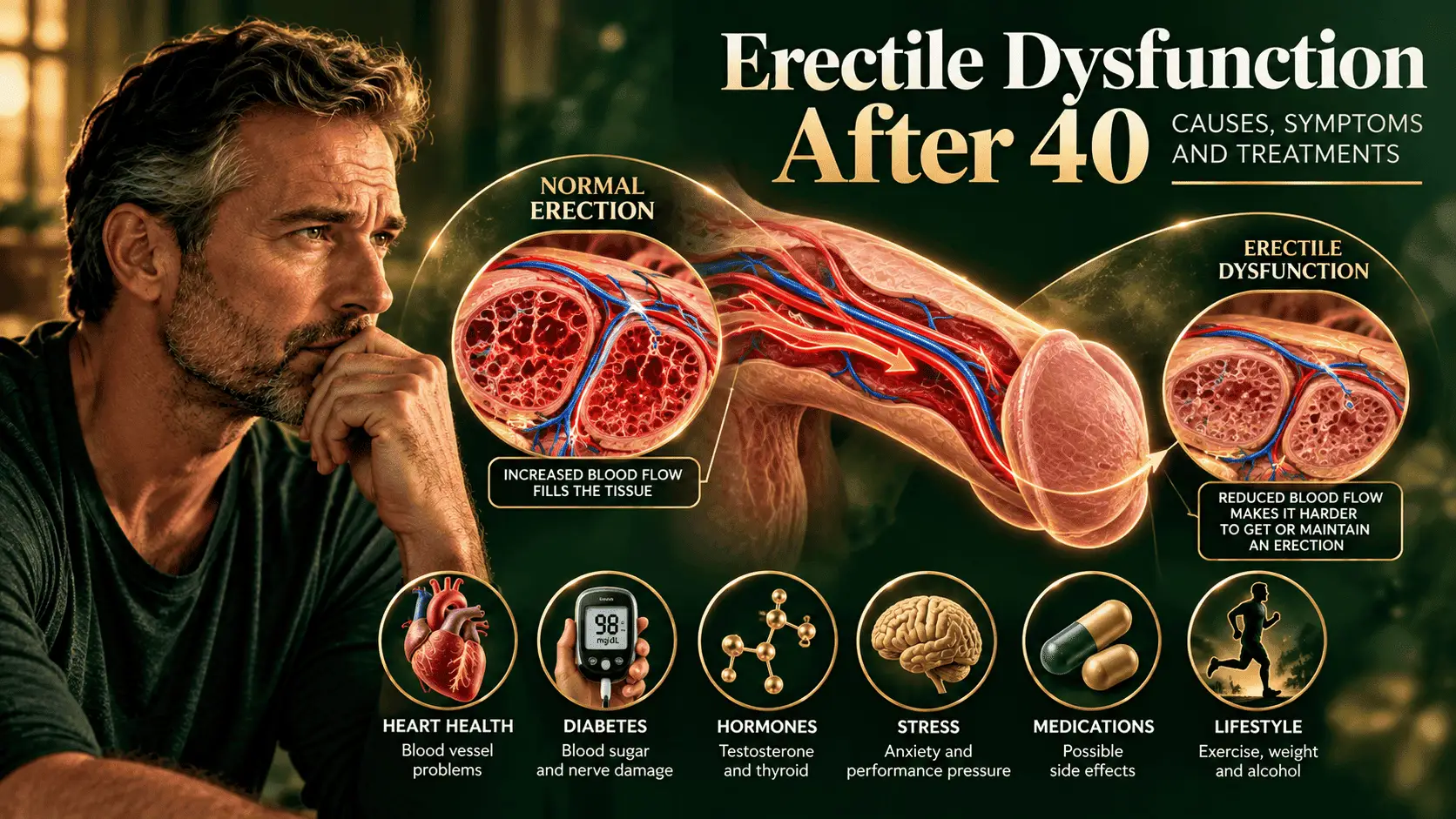
MEN’S SEXUAL HEALTH / THE COMPLETE GUIDE
Erectile difficulties can feel deeply personal. But an erection problem is not a verdict on your masculinity, your relationship or your future sexual wellbeing.
Perhaps you have noticed that your erections are less reliable. Maybe you can get an erection but struggle to maintain it. Or perhaps a change has made you anxious about intimacy.
These experiences can become more common as men age, but erectile dysfunction is not something every man must simply accept.
Many possible causes can be identified, and different treatments are available depending on the underlying problem.
This comprehensive guide explains the symptoms, causes, diagnosis and treatment of erectile dysfunction after 40, with particular attention to physical health, emotional wellbeing and realistic expectations.
What Is Erectile Dysfunction?
Erectile dysfunction, commonly called ED, is the persistent or recurrent difficulty getting or maintaining an erection firm enough for satisfactory sexual activity.
The older term “impotence” is sometimes used, but erectile dysfunction is more precise and generally preferred in modern medical communication.
An occasional erection difficulty does not necessarily indicate a medical disorder. Temporary changes may occur during periods of stress, fatigue, illness or heavy alcohol use.
However, if difficulties keep happening, begin affecting confidence or appear alongside other symptoms, a healthcare professional can help investigate.
Common Symptoms of Erectile Dysfunction
- Getting an erection sometimes, but not consistently when you want sexual activity.
- Getting an erection that does not last long enough for satisfying intimacy.
- Having difficulty achieving an erection at all.
- Experiencing ongoing concern or distress because of these difficulties.
These symptoms can vary in severity and may develop gradually or appear more suddenly.
Libido describes sexual desire. Erectile function describes the ability to achieve and maintain an erection. A man may have strong sexual desire despite erectile difficulties, or low desire with otherwise normal erections.
Read more: 7 Reasons Men Lose Their Sex Drive After 40 .
How Does an Erection Work?
An erection involves coordination between the brain, nerves, blood vessels and tissues of the penis.
During sexual arousal, nerve signals help relax smooth muscle in the erectile tissues. This allows blood to flow into specialised spaces within the penis.
As these spaces fill, the tissues expand and reduce the outflow of blood, helping maintain firmness.
Conditions that disrupt blood flow, nerve signalling, tissue function or the psychological processes involved in arousal may interfere with this response.
Hormonal health may also influence sexual desire and certain aspects of sexual function, but testosterone alone does not control every erection.
That is why erectile dysfunction can have more than one cause. It is also why a single supplement or hormone treatment cannot address every case.
What Causes Erectile Dysfunction After 40?
ED is often described as physical or psychological, but in practice these factors commonly overlap.
For example, a man with diabetes may develop changes in blood vessel function and then experience anxiety after several difficult sexual encounters. Both factors may need attention.
1. Blood Vessel and Circulation Problems
Healthy blood flow is essential for normal erectile function.
Conditions affecting arteries and blood vessels can reduce the ability to deliver sufficient blood to erectile tissue.
Possible contributors include atherosclerosis, high blood pressure, high cholesterol and cardiovascular disease.
This is one reason why persistent ED should not automatically be dismissed as a sexual issue alone.
2. Diabetes and Blood Sugar Problems
Diabetes can affect both blood vessels and nerves involved in erections.
Over time, diabetes-related vascular and nerve changes may increase the likelihood of erectile difficulties.
Effective diabetes care is important for overall health and may help protect sexual function, although existing damage may not always reverse.
If ED occurs alongside unusual thirst, frequent urination or other symptoms, a clinician may recommend checking blood glucose.
3. Stress and Performance Anxiety
Sexual arousal is influenced by emotional wellbeing.
Anxiety may interfere with the ability to relax and focus on intimacy.
After one difficult experience, a man may begin anticipating another problem. This can create a cycle of worry and self-monitoring.
However, anxiety and physical causes are not mutually exclusive.
Read more: 9 Ways to Overcome Sexual Performance Anxiety After 40 .
4. Hormonal Conditions
Low testosterone can contribute to sexual symptoms in some men, particularly when reduced desire is also present.
Other endocrine conditions, including thyroid disorders, may also affect sexual wellbeing.
However, erectile dysfunction alone does not establish testosterone deficiency.
Appropriate medical assessment and laboratory testing are needed when hormonal causes are suspected.
Read more: Low Testosterone After 40: 11 Early Signs Men Shouldn’t Ignore .
5. Medication Side Effects
Certain medicines can contribute to erectile difficulties.
Examples include some antidepressants, some medicines used for blood pressure and selected hormonal or other treatments.
This does not mean that these medicines should be avoided. Their benefits may be medically important.
If symptoms began after a medication change, discuss the timing with the prescribing clinician.
Never stop a prescribed medication without professional guidance.
6. Nerve Damage and Neurological Conditions
Nerves transmit the signals involved in sexual arousal and erectile function.
Neurological disorders, spinal injuries, diabetes-related nerve damage and certain pelvic surgeries can affect these signals.
Treatment options depend on the particular condition and the extent of its effects.
7. Lifestyle and General Health
Smoking, heavy alcohol consumption, physical inactivity and certain chronic health conditions are associated with an increased risk of erectile dysfunction.
These factors may contribute through vascular, metabolic or psychological pathways.
Improving general health is important even when medical treatment is also needed.
Physical vs. Psychological Erectile Dysfunction
Some symptom patterns can suggest a possible contribution from physical or emotional factors, but they cannot reliably diagnose the cause on their own.
| Observation | What it may suggest |
|---|---|
| Gradually worsening erections | Possible vascular, metabolic or other physical factors |
| Difficulties mainly in one situation | Possible situational anxiety, relationship factors or mixed causes |
| Fewer spontaneous erections | May warrant assessment of sleep, vascular or hormonal health |
| Strong desire but difficulty maintaining an erection | Erectile function and libido need separate consideration |
| Sudden symptoms after a medication change | Possible medication contribution requiring review |
A clinician considers your overall history, examination and individual risk factors before drawing conclusions.
Can Erectile Dysfunction Be an Early Sign of Heart Disease?
Erectile dysfunction can be associated with underlying cardiovascular disease.
Because blood vessel health is essential for erections, persistent symptoms may provide a useful opportunity to examine cardiovascular risk.
The American Urological Association recommends counselling men that ED can be a marker of cardiovascular disease and other health conditions.
This does not mean every man with ED has a heart condition. Nor can an erection problem predict a heart attack in an individual patient.
However, reviewing blood pressure, diabetes risk, cholesterol, smoking and other factors may be appropriate.
New chest pain, severe breathlessness, fainting or symptoms suggestive of a heart attack require urgent medical assessment. Sexual performance medication is not a substitute for cardiovascular care.
Is Erectile Dysfunction a Normal Part of Ageing?
ED becomes more common with age, but it is not an inevitable consequence of turning 40, 50 or 60.
Many men maintain satisfying sexual function into later adulthood.
Age-related changes in health, medications and lifestyle may increase the likelihood of difficulties.
A noticeable or persistent problem deserves attention rather than being dismissed as simply getting older.
How Do Doctors Diagnose Erectile Dysfunction?
A diagnosis begins with a conversation about your symptoms and general health.
A healthcare professional may ask when difficulties began, whether they occur consistently, how long they have continued and how they affect your wellbeing.
Questions about sexual desire, ejaculation, morning erections and relationship circumstances may also be relevant.
Medical History and Examination
A clinician may review your medication list, smoking or alcohol habits, medical conditions and cardiovascular risk factors.
Depending on the situation, a focused physical examination can help identify relevant medical or anatomical concerns.
Blood Tests
Selected laboratory tests may help evaluate possible underlying conditions.
These can include blood glucose or HbA1c, lipid measurements and morning testosterone levels when indicated by the evaluation and applicable clinical guidance.
The need for further hormonal tests varies with the individual findings.
Specialised Testing
Some men need specialised evaluation, particularly when initial management does not help or a specific cause is suspected.
Tests may include assessment of penile blood flow or other investigations selected by a urologist.
Most people do not need every available test. The goal is to identify relevant contributing factors, not order investigations without a reason.
What to Tell Your Doctor
- When the problem began
- Whether it occurs every time or occasionally
- Whether desire has changed
- Any change in morning erections
- Current medicines and supplements
- Diabetes, blood pressure or heart concerns
- Sleep, stress and relationship factors
What Treatments Are Available for Erectile Dysfunction?
Treatment depends on the cause, severity, other medical conditions and personal preferences.
Some men benefit from lifestyle changes or psychological care. Others may use prescription medication, devices or specialist procedures.
1. Prescription Oral Medication
Medicines such as sildenafil and tadalafil belong to a class called phosphodiesterase type 5 inhibitors, or PDE5 inhibitors.
They help improve the erectile response to sexual stimulation by supporting the normal blood vessel relaxation process.
They do not automatically create sexual desire and do not work identically for every person.
Side effects, drug interactions and suitability must be considered before use.
PDE5 inhibitors must not be used with nitrate medicines for chest pain or recreational nitrites, sometimes called poppers. The combination can cause a dangerous drop in blood pressure.
Always tell your clinician about heart conditions and all medications before using an erectile dysfunction drug.
2. Psychological and Sex Therapy
Counselling or psychosexual therapy may help when anxiety, depression, relationship stress or negative expectations contribute to erectile difficulties.
For some men, psychological support works alongside medical treatment.
Therapy may address performance fears, communication and unhelpful patterns that develop after difficult sexual experiences.
3. Vacuum Erection Devices
A vacuum erection device uses negative pressure to draw blood into the penis and create an erection.
Some devices include a constriction ring to help maintain firmness temporarily.
These devices can be useful for selected patients, but proper instruction and attention to safety are important.
4. Specialist Medication or Procedures
When oral medication is unsuitable or ineffective, a urologist may discuss other options, including locally administered medication or penile prosthesis surgery in appropriate cases.
Each option involves different benefits, limitations and potential adverse effects.
Specialist guidance helps ensure that the approach matches your medical history and goals.
5. Treating Underlying Conditions
Managing high blood pressure, diabetes, sleep disorders or other contributing conditions is an important part of care.
Treatment may improve sexual function in some patients, but the degree of improvement depends on the cause and duration of the problem.
Can You Improve Erectile Dysfunction Naturally?
Some lifestyle improvements may reduce risk factors and support erectile health, particularly when cardiovascular or metabolic issues are involved.
But there is no universal natural cure for ED.
Move Regularly
Physical activity supports cardiovascular fitness, weight management and overall wellbeing. Choose exercise appropriate to your health.
Protect Sleep
Aim for a consistent sleep routine. Ask about sleep apnea if you snore heavily or experience persistent daytime sleepiness.
Stop Smoking
Smoking harms vascular health. Stopping can benefit the heart and circulation, regardless of the direct effect on ED symptoms.
Manage Health Conditions
Work with healthcare professionals to manage diabetes, blood pressure, cholesterol and other relevant medical conditions.
Do Herbal Supplements Cure Erectile Dysfunction?
Many supplements are marketed as natural alternatives to prescription ED treatments.
Advertisements may promise stronger erections, higher testosterone or instant results.
However, evidence for many popular products is limited or inconsistent. Some products sold for sexual enhancement have contained undeclared prescription drug ingredients.
Herbs and supplements can also interact with other medicines or cause unwanted effects.
Never assume that a substance is safe or effective simply because it is labelled natural.
Traditional approaches may be topics of scientific study, but they should not be presented as proven cures without adequate clinical evidence.
Consult a qualified professional before using products advertised for sexual performance.
Can Erectile Dysfunction Affect Relationships?
ED can lead to embarrassment, avoidance and misunderstandings between partners.
A man may fear that an erection difficulty will be interpreted as a lack of attraction.
A partner may feel confused or rejected without understanding the possible medical or emotional causes.
Open communication can reduce unnecessary assumptions.
Discuss concerns outside of a high-pressure intimate moment. Focus on mutual understanding, comfort and consent.
Intimacy does not need to be measured by one physical response.
Professional support may help couples when ongoing sexual concerns create distress or conflict.
When Should You See a Doctor for Erectile Dysfunction?
Seek medical advice if erection difficulties are persistent, recurrent or affecting your quality of life.
Arrange an assessment particularly when symptoms develop alongside diabetes, high blood pressure, heart disease, significant hormonal symptoms or changes after a new medication.
A healthcare professional can discuss potential causes and suitable treatment options.
An erection lasting four hours or longer requires emergency medical assessment, even if it is not painful. This is known as priapism.
Chest pain, severe breathlessness or symptoms suggesting a cardiovascular emergency also require immediate attention.
What Can You Expect From Treatment?
The aim of treatment is to improve sexual function and wellbeing while addressing underlying health concerns.
Some men respond well to a first treatment approach. Others need adjustments, combination care or specialist input.
No legitimate medical approach guarantees the same result for everyone.
Treatment choices should consider safety, preferences, medical conditions and the personal meaning of sexual satisfaction.
Frequently Asked Questions
What is the main cause of erectile dysfunction after 40?
There is no single main cause for every man. Blood vessel conditions, diabetes, medications, stress, hormonal conditions and other factors may contribute. A medical evaluation can help identify relevant causes.
Can erectile dysfunction be reversed?
Some cases improve when contributing factors are treated. Others require ongoing management. The outlook depends on the underlying cause and individual health circumstances.
Does ED mean I have low testosterone?
No. Testosterone deficiency is one possible factor, but many men with ED have normal testosterone. Testing should be interpreted alongside symptoms and clinical findings.
Can anxiety cause erectile dysfunction?
Yes. Anxiety can contribute to erection difficulties or make an existing physical problem more distressing. Psychological and medical factors often overlap.
Do morning erections rule out physical problems?
No. Morning erections can offer useful information during assessment, but their presence does not rule out every physical cause of ED.
Is erectile dysfunction a warning sign of heart disease?
ED can be associated with cardiovascular risk factors and may warrant an assessment of vascular health. It does not automatically mean that heart disease is present.
Is sildenafil safe for all men?
No. Suitability depends on medical history and other medications. It must not be combined with nitrates or recreational nitrites because of the risk of severe low blood pressure.
Can exercise help erectile dysfunction?
Regular physical activity supports vascular and metabolic health and may help some men with ED. It is not a guaranteed replacement for medical care.
Should I buy testosterone boosters online?
Do not use unregulated products to self-treat ED. Many supplements lack reliable evidence and may contain undeclared or unsafe ingredients.
Which doctor treats erectile dysfunction?
A primary care clinician can often begin evaluation. A urologist may provide additional assessment and treatment when specialist care is appropriate.
The Bottom Line
Erectile dysfunction after 40 is common, but it is not an inevitable or insignificant part of ageing.
It can involve blood flow, nerve signalling, hormones, medication effects, mental health and relationship factors.
Because ED may also signal underlying health concerns, persistent symptoms deserve thoughtful evaluation.
A reliable diagnosis, evidence-based treatment and honest communication offer a better foundation than shame, guesswork or guaranteed-cure advertisements.
Sexual health is part of overall health, and seeking appropriate support is a practical step toward understanding it.
Medical Sources & Further Reading
- NIDDK — Erectile Dysfunction: Overview and Medical Information
- NIDDK — Symptoms and Causes of Erectile Dysfunction
- NIDDK — Diagnosis of Erectile Dysfunction
- European Association of Urology — Management of Erectile Dysfunction
- American Urological Association — Erectile Dysfunction Guideline
This article is intended for general educational purposes only. It does not provide personalised medical advice, diagnosis or treatment. Consult a qualified healthcare professional about erectile difficulties, medications and individual health concerns. This article has not undergone independent clinical review.