
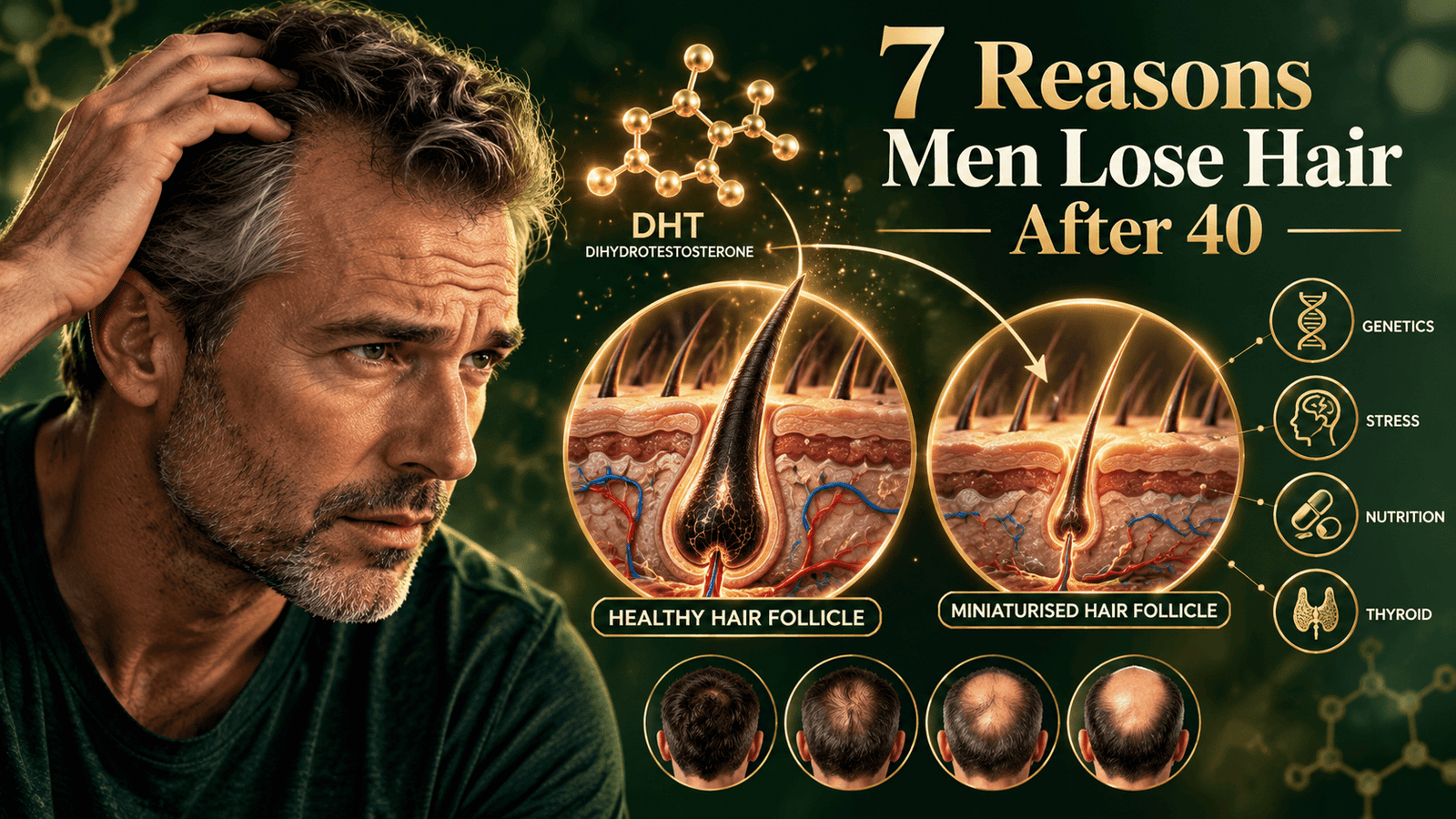
MEN’S HAIR, SKIN & APPEARANCE / AFTER 40
You notice more scalp showing in the mirror. Perhaps your hairline has moved back, or the crown of your head looks thinner than it did a few years ago. Is this simply ageing, or could something else be happening?
Hair loss is a common concern among men, particularly during middle age. For some, it happens gradually. For others, the change seems surprisingly fast.
Although hereditary male pattern baldness is the most common explanation, it is not the only possible cause. Stress, illness, nutritional deficiencies and certain scalp disorders can also contribute to thinning hair.
Understanding the cause matters, because different types of hair loss respond to different treatments. This guide explores seven possible reasons men lose hair after 40, what medical evidence tells us, and when a dermatologist can help.
Is Hair Loss Normal for Men Over 40?
Hair becomes thinner with age for many men, but the process is highly individual. Some people experience visible thinning in their twenties, while others retain most of their hair throughout later life.
Genetics is a major reason for these differences. Hair follicles respond differently to hormonal signals depending on inherited characteristics.
A gradual receding hairline or thinning at the crown often suggests male pattern hair loss, medically known as androgenetic alopecia.
However, sudden shedding, round bald patches, itching, inflammation or pain are not typical features of ordinary male pattern baldness. These changes may require a different medical assessment.
Hair loss does not automatically mean you have low testosterone. Male pattern hair loss is closely related to inherited sensitivity to dihydrotestosterone (DHT), not simply the amount of testosterone circulating in your bloodstream.
7 Possible Causes of Hair Loss in Men After 40
1. Male Pattern Baldness and Genetics
Male pattern baldness is the most common cause of progressive hair thinning in adult men.
It typically begins with a receding hairline, thinning at the temples, or reduced density at the crown. Over time, these areas may expand.
The condition is influenced by genetics and the effects of androgens on susceptible hair follicles.
In genetically sensitive follicles, the normal growth cycle gradually changes. Hair becomes finer, shorter and less visible. This process is called follicular miniaturisation.
Family history can offer clues, but the genes involved may come from either side of the family. It is a myth that baldness is inherited only from your mother’s father.
Male pattern hair loss is not usually dangerous, but it can affect confidence and self-image. A dermatologist can help confirm the diagnosis and explain realistic treatment options.
2. Changes in DHT Sensitivity
Dihydrotestosterone, or DHT, is an androgen produced when an enzyme called 5-alpha reductase converts testosterone into DHT.
DHT performs important biological functions, but in genetically susceptible scalp follicles, it can contribute to progressive miniaturisation.
This does not mean DHT is harmful to every man or that all scalp hair responds to it in the same way.
Follicles along the sides and back of the scalp may remain relatively resistant, which helps explain the typical pattern of male baldness.
Some medical treatments aim to reduce the effects of DHT on hair follicles. However, these treatments can have adverse effects and require informed decisions.
Do not assume that lowering testosterone or attempting to change your hormones independently will safely prevent hair loss.
3. Physical or Emotional Stress
A significant physical or emotional stressor can sometimes trigger a type of shedding called telogen effluvium.
Possible triggers include serious illness, major surgery, rapid weight loss, intense psychological stress or substantial changes in nutrition.
The shedding often becomes noticeable weeks to months after the event, rather than immediately.
Unlike classic male pattern baldness, telogen effluvium often causes more diffuse shedding throughout the scalp.
In many cases, hair growth improves after the underlying trigger resolves. However, recovery may take several months, and some cases require further evaluation.
Stress-related shedding can also occur alongside inherited hair loss, making the changes more noticeable.
4. Nutritional Deficiencies and Restrictive Diets
Hair follicles require adequate energy and nutrients to support normal growth.
Severe calorie restriction, inadequate protein intake and certain nutritional deficiencies can contribute to hair shedding.
Iron deficiency is one possible factor in selected patients, although nutritional testing should depend on medical history and examination.
Some online advertisements suggest that almost every man with thinning hair needs high-dose biotin, zinc or other supplements. That claim is misleading.
Taking extra nutrients when you are not deficient does not reliably reverse genetic baldness. Excessive supplementation can even cause problems, depending on the product and dose.
A balanced diet supports general health, but hereditary hair loss usually requires a different approach if treatment is desired.
5. Thyroid Disorders and Other Medical Conditions
The thyroid gland regulates many metabolic processes, including those affecting hair growth.
Both an underactive and an overactive thyroid may be associated with changes in hair texture or increased shedding.
Other health conditions can contribute as well. For instance, some inflammatory or autoimmune disorders affect the normal function of hair follicles.
Alopecia areata is an autoimmune condition that often creates well-defined patches of hair loss. It differs from the gradual recession typically seen with male pattern baldness.
When hair loss is accompanied by unusual fatigue, weight changes, skin changes or other persistent symptoms, a clinician may recommend additional investigation.
6. Medication-Related Hair Shedding
Certain medications can contribute to hair loss or shedding in some people.
The effects depend on the medication, the individual and the underlying medical condition being treated.
Hair changes may develop after starting a new prescription, although timing alone cannot prove that a medication is responsible.
Review the issue with your prescribing clinician if you suspect a connection.
Do not stop treatment for blood pressure, mood disorders, heart disease or other conditions without professional guidance.
Your healthcare professional may evaluate alternative causes before recommending changes.
7. Scalp Inflammation and Skin Conditions
Healthy hair growth depends on the condition of the scalp and its follicles.
Certain inflammatory conditions, infections and disorders that cause scarring can damage follicles or contribute to hair loss.
Symptoms may include redness, flaking, itching, tenderness, pustules or unusual patches where hair is missing.
Some conditions are treatable, but scarring hair loss may cause permanent damage if appropriate care is delayed.
Seek medical assessment when hair loss is painful, inflamed, sudden or associated with changes in scalp appearance.
Does Low Testosterone Cause Baldness?
This is a common question, especially among men over 40 who are also concerned about changes in energy or sexual desire.
However, male pattern baldness does not automatically indicate low or high testosterone.
The condition is largely related to inherited follicular sensitivity to the androgen DHT. Men with normal testosterone levels may develop significant male pattern baldness.
Likewise, men with testosterone deficiency do not necessarily develop the familiar pattern of a receding hairline and thinning crown.
Hormonal evaluation is appropriate when symptoms and clinical findings suggest a hormonal condition. It is not generally necessary to assume a testosterone problem based on hair loss alone.
Related reading: Low Testosterone After 40: 11 Early Signs Men Shouldn’t Ignore .
How Can You Tell Which Type of Hair Loss You Have?
The pattern and timing of hair loss can provide useful clues, but a diagnosis may require professional examination.
Gradual Thinning
A slowly receding hairline or thinning crown is commonly associated with male pattern hair loss.
Sudden Shedding
A noticeable increase in hair shedding after illness, stress or weight loss may suggest telogen effluvium.
Round Bald Patches
Distinct patches may point toward alopecia areata or another localised condition.
Itching or Inflammation
Pain, redness, scaling or scarring may indicate a scalp disorder needing medical assessment.
A dermatologist may examine the hair and scalp with a magnifying device called a dermatoscope or trichoscope. Additional tests are used when the clinical findings suggest an underlying cause.
Which Hair Loss Treatments Actually Work?
Not every advertised hair-growth treatment has strong scientific evidence behind it.
For male pattern hair loss, topical minoxidil and prescription finasteride are among the best-established medication options.
Neither is guaranteed to work, and results vary between individuals.
Topical Minoxidil
Minoxidil is available in topical forms applied to the scalp. It can help slow hair loss and promote some regrowth in men with androgenetic alopecia.
Visible changes usually require consistent use over several months. Some men respond better than others, and complete restoration of lost hair is unlikely.
Scalp irritation can occur. If treatment is stopped, the benefits generally diminish over time.
Follow product directions and seek medical advice if you have questions about suitability or adverse effects.
Prescription Finasteride
Finasteride reduces the conversion of testosterone into DHT by inhibiting an enzyme involved in that process.
It can slow male pattern hair loss and may improve hair density in some men.
Potential adverse effects include reduced libido, erectile difficulties and mood changes. Persistent sexual adverse effects have also been reported.
Because of these considerations, finasteride requires an informed discussion with a qualified prescribing professional.
Finasteride can also alter prostate-specific antigen (PSA) test results. Tell your clinician if you use it before PSA testing is interpreted.
Hair Transplantation
Hair transplantation involves moving suitable hair follicles from donor areas to regions affected by thinning or baldness.
Modern techniques may provide natural-looking results for appropriately selected patients. However, the procedure has limitations, costs and potential complications.
A hair transplant does not automatically stop future loss in untreated follicles. Long-term planning is important.
Other Procedures
Some clinics offer platelet-rich plasma injections, low-level light devices and additional procedures.
Evidence for these treatments varies, and outcomes are not equally predictable. Some approaches require repeated sessions and ongoing expense.
Discuss the expected benefits, evidence quality, costs and potential adverse effects before choosing a procedure.
Starting evidence-based treatment early may help preserve existing hair. However, no available treatment can promise complete regrowth for every patient.
Do Rosemary Oil and Natural Hair Remedies Work?
Natural hair remedies receive considerable attention online. Rosemary oil, castor oil, herbal shampoos and botanical serums are frequently promoted as alternatives to medical hair loss treatment.
However, traditional use and popular testimonials are not the same as strong clinical evidence.
Some botanical ingredients have been studied in small or preliminary investigations, but the evidence is generally more limited than that supporting established treatments for male pattern baldness.
Essential oils may also irritate the skin or trigger allergic reactions, particularly when used inappropriately.
If you enjoy botanical hair-care products, choose them carefully and avoid expecting them to reverse inherited hair loss.
Never apply concentrated essential oils to irritated or damaged skin without appropriate professional advice.
What About Biotin and Hair-Growth Supplements?
Biotin is essential for normal metabolism, but deficiency is uncommon in people eating an adequate diet.
Taking large amounts of biotin has not been shown to reliably reverse male pattern hair loss in men without a deficiency.
High-dose biotin supplements can also interfere with certain laboratory tests, potentially affecting medical decisions.
Other vitamins and minerals should be used when there is a valid nutritional or medical reason, not merely because they are advertised for thicker hair.
Discuss persistent shedding with a healthcare professional before beginning a combination of supplements.
Five Practical Steps When You Notice Thinning Hair
- Document the change. Take photographs in similar lighting every few months, rather than checking your hairline constantly.
- Look for patterns. Notice whether thinning is gradual, patchy, diffuse or accompanied by scalp symptoms.
- Review recent changes. Think about illness, weight loss, stress, new medications or significant dietary changes.
- Seek a proper diagnosis. A dermatologist can help distinguish genetic hair loss from treatable medical conditions.
- Set realistic goals. Some men want to preserve existing hair; others prefer a closely cropped style or no treatment. Both are reasonable choices.
Can Hair Loss Affect a Man’s Confidence?
Absolutely. Hair is closely connected to personal appearance, identity and social expectations for many people.
A man who notices thinning may feel older than he expected, become self-conscious in photographs or spend more time thinking about his appearance.
These feelings are understandable, but hair loss does not determine a person’s attractiveness, health or value.
Some men feel more confident after receiving treatment. Others prefer changing their hairstyle, shaving their head or accepting their natural appearance.
If appearance-related worries become persistent or interfere with daily life, psychological support may be helpful.
There is no obligation to seek cosmetic treatment simply because hair loss is common or socially visible.
When Should You See a Dermatologist?
Consider an appointment if hair loss is progressing and you want to understand your treatment options.
Seek assessment more promptly if you notice sudden or extensive shedding, round bald patches, scalp pain, significant redness, pustules, scarring or other unusual changes.
A clinician may ask about your family history, recent illnesses, medications, diet, and scalp symptoms.
Where indicated, evaluation may include blood tests or other investigations, but routine extensive testing is not required for every man with typical male pattern baldness.
Frequently Asked Questions About Male Hair Loss
Why is my hair thinning after 40?
Gradual thinning after 40 is commonly related to androgenetic alopecia, a hereditary condition influenced by follicular sensitivity to DHT. Other causes include illness, stress, medications, nutritional deficiencies and scalp disorders.
Can hair loss in men over 40 be reversed?
Some forms of hair loss are temporary or improve after the underlying cause is addressed. Male pattern baldness can sometimes be slowed and partially improved, but complete regrowth is not guaranteed.
Does losing hair mean my testosterone is high?
No. Male pattern baldness depends largely on inherited sensitivity to DHT in scalp follicles. It does not provide a reliable measurement of blood testosterone levels.
Is hair loss inherited from the mother’s side?
Genetic susceptibility can come from both parents. The idea that male baldness is determined only by the mother’s father is inaccurate.
How long does minoxidil take to work?
Visible improvement often requires several months of consistent use. Some men notice meaningful changes within six to twelve months, while others do not respond. Benefits generally decline after stopping treatment.
Can stress make male pattern baldness worse?
A significant stressful event may trigger additional shedding, sometimes called telogen effluvium. This can occur alongside genetic hair loss and make thinning more noticeable.
Can vitamins cure male pattern baldness?
There is no reliable evidence that taking extra vitamins reverses hereditary male pattern baldness when nutritional deficiencies are absent. Correcting a confirmed deficiency may be important for general hair health.
Is finasteride safe for every man?
No medication is suitable for everyone. Finasteride may cause sexual and mood-related adverse effects and can affect PSA results. A clinician should discuss benefits, risks and alternatives before treatment.
The Bottom Line
Hair loss after 40 can have several explanations, but male pattern baldness is the most common cause of gradual thinning in men.
Understanding the difference between inherited follicular changes and other medical causes can help you avoid unnecessary supplements, misleading marketing and unrealistic promises.
Evidence-based treatment may help preserve hair or improve density in some people, but the decision to seek treatment is personal.
Whether you choose medical care, a new hairstyle or simply embrace your natural appearance, reliable information should guide your decision.
Medical Sources & Further Reading
- American Academy of Dermatology: Male Pattern Hair Loss and Treatment
- DermNet: Male Pattern Hair Loss
- NHS: Hair Loss
- NHS: About Finasteride
- DermNet: Hair Loss and Other Causes
This article is for general educational purposes only. It does not provide personalised medical advice, diagnosis or treatment. Consult a qualified healthcare professional for persistent hair loss, medication decisions or scalp symptoms. This article has not undergone independent clinical review.